
Get ready to save lives!
Develop essential first aid skills with the Venemergencia Foundation

First Aid Provider Course


Please fill out the form, and we'll
get in touch with you
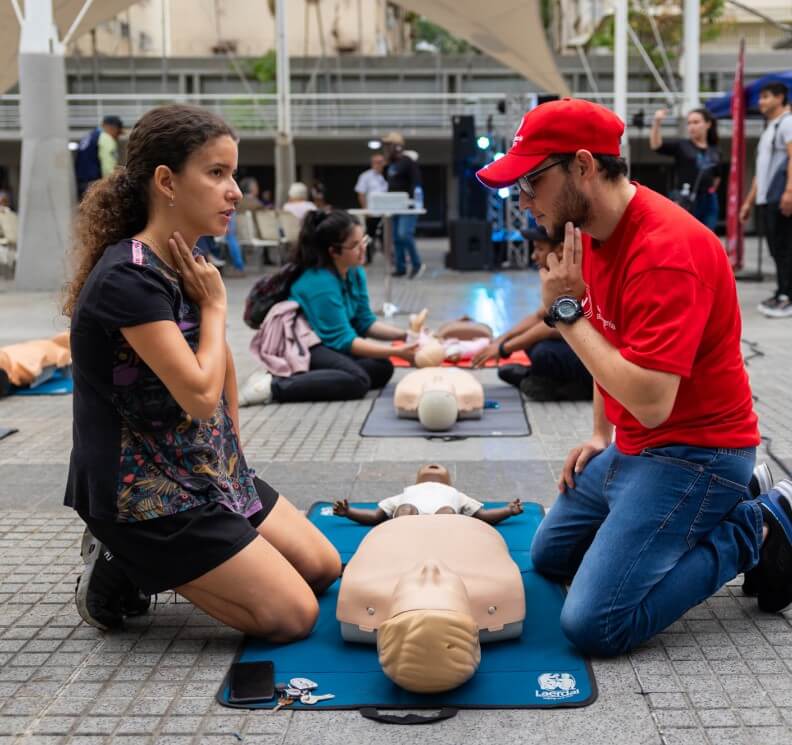
The PAMI training course combines theory and practice and is designed to help participants acquire critical skills in the assessment and initial management of emergencies and serious injuries, in accordance with international standards.

Learn through simulations
and case studies

Certified training

Connect with healthcare
professionals
There's a PAMI plan for you
Tailored
to your schedule
PAMI Corporate Flash: Sessions designed so that every employee can fit 30-minute theoretical and practical modules into their schedule, covering everything they need to know about responding to medical emergencies: the ABCDE protocol, initial assessment of an injured person, CPR for adults and children, defibrillation, initial assessment of trauma patients, and the most relevant medical injuries—all in 30-minute sessions.
Tailored to your
needs
Basic PAMI: Medical emergencies can happen to anyone, at any time, and anywhere. If you want to be prepared to care for your loved ones, this course is essential. You will learn to act quickly and effectively, providing the necessary first aid until professional medical services arrive.
Intermediate PAMI: This course is designed for anyone with responsibilities related to the well-being of groups: teachers, coaches, recreation leaders, and other community leaders. The PAMI Intermediate course focuses on identifying specific injuries and performing secondary assessments of prehospital medical emergencies.
PAMI Advanced: This course is designed for those seeking to deepen their knowledge and skills in managing medical emergencies. This course is ideal for first responders and individuals who may be exposed to critical situations.
PAMI Pediatric
PAMI Camps/Hikers
PAMI Culinary
PAMI Geriatric
By specialty:

Duration:
8 HOURS

IN-PERSON
theoretical and practical
Basic PAMI
I. Initial Assessment of an Injured Person
II. Initial Assessment Protocol
- PAS Protocol
III. Cardiopulmonary Resuscitation (CPR) for Adults and Children
IV. Automated
External Defibrillation V. Initial Assessment of the Trauma Patient (XABCDE Protocol)
VI. Most Common Medical Injuries
- Wounds
- Burns
- Fractures
- Sprains
- Dislocations
VII. Bandaging and Immobilization
VIII. Patient Handling and Transport
Intermediate PAMI
I. Algorithm Simulation II. DEA
III. Trauma Kinematics IV. Secondary Assessment of an Injured Patient
- Quantification of vital signs
- Segmental assessment
- Head and Spinal Injuries
- Abdominal, pelvic, and thoracic trauma
- Extremity injuries
V. Loading and Transport of Injured Patients VI. Bandaging and Immobilization of Injuries
VII. Basic Airway Management
Advanced PAMI
I. Loading and Transport (Ambulance)
II. Medical Assessment During Transport
III. Communications
IV. Basic Recognition of Common Conditions
- Abdominal pain
- Allergic reactions
- Asthma attack
- Headache
- Low back pain
- Neck pain
V. Initial management of hypertensive
crisis VI. Management of uncontrolled
diabetic patients VII. Basic principles of administering medications under medical supervision VIII. Triage (classification of patients in mass casualty incidents)
Pediatric PAMI
I. Initial Assessment of an Injured Person
II. Initial Assessment Protocol
- PAS Protocol
III. Cardiopulmonary Resuscitation (CPR) for Children
IV. Automated External Defibrillation in Children
V. Initial Assessment of the Trauma Patient (XABCDE Protocol)
VI. Most Common Medical Injuries in Pediatrics
- Wounds
- Fractures
- Sprains
- Febrile Syndrome (Correct measurement, physical signs, common myths, appropriate management)
- Warning Signs in Pediatrics
VII. Bandaging and Immobilization
VIII. Patient Handling and Transport
PAMI Camps/Hikers
I. Initial Assessment of an Injured Person
II. Initial Assessment Protocol
- PAS Protocol
III. Cardiopulmonary Resuscitation (CPR) for Adults and Children
IV. Automated External Defibrillation V. Initial Assessment of the Trauma Patient (XABCDE Protocol)
VI. Most Common Medical Injuries
- Wounds
- Burns
- Fractures
- Sprains
- Insect bites
- Allergies and poisonings
VII. Bandaging and immobilization
VIII. Patient transport and handling
PAMI Gastronomic
I. Initial Assessment of an Injured Person
II. Initial Assessment Protocol
- PAS Protocol
III. Cardiopulmonary Resuscitation (CPR) for Adults and Children
IV. Automated
External Defibrillation V. Initial Assessment of Trauma Patients (XABCDE Protocol)
VI. Most Relevant Medical Injuries in the Food Service Industry
- Wounds
- Burns
- Bandaging and Immobilization
- Poisonings
- Anaphylaxis
PAMI Geriatric Center
I. Initial Assessment of an Injured Person
II. Initial Assessment Protocol
- PAS Protocol
III. Cardiopulmonary Resuscitation (CPR) for Adults and Children
IV. Automated
External Defibrillation V. Initial Assessment of the Trauma Patient (XABCDE Protocol)
VI. The Most Common Medical Conditions in Geriatrics
- Wounds
- Burns
- Dislocations
- Fractures
VII. Bandaging and immobilization
VIII. Lifting and transferring patients
PAMI Básico
I. Initial Assessment of an Injured Person
II. Initial Assessment Protocol
- PAS Protocol
III. Cardiopulmonary Resuscitation (CPR) for Adults and Children
IV. Automated
External Defibrillation V. Initial Assessment of the Trauma Patient (XABCDE Protocol)
VI. Most Common Medical Injuries
- Wounds
- Burns
- Fractures
- Sprains
- Dislocations
VII. Bandaging and Immobilization
VIII. Patient Handling and Transport
PAMI Intermedio
I. Algorithm Simulation II. DEA
III. Trauma Kinematics IV. Secondary Assessment of an Injured Patient
- Quantification of vital signs
- Segmental assessment
- Head and Spinal Injuries
- Abdominal, pelvic, and thoracic trauma
- Extremity injuries
V. Loading and Transport of Injured Patients VI. Bandaging and Immobilization of Injuries
VII. Basic Airway Management
PAMI Avanzado
I. Loading and Transport (Ambulance)
II. Medical Assessment During Transport
III. Communications
IV. Basic Recognition of Common Conditions
- Abdominal pain
- Allergic reactions
- Asthma attack
- Headache
- Low back pain
- Neck pain
V. Initial management of hypertensive
crisis VI. Management of uncontrolled
diabetic patients VII. Basic principles of administering medications under medical supervision VIII. Triage (classification of patients in mass casualty incidents)
PAMI Pediátrico
I. Initial Assessment of an Injured Person
II. Initial Assessment Protocol
- PAS Protocol
III. Cardiopulmonary Resuscitation (CPR) for Children
IV. Automated External Defibrillation in Children
V. Initial Assessment of the Trauma Patient (XABCDE Protocol)
VI. Most Common Medical Injuries in Pediatrics
- Wounds
- Fractures
- Sprains
- Febrile Syndrome (Correct measurement, physical signs, common myths, appropriate management)
- Warning Signs in Pediatrics
VII. Bandaging and Immobilization
VIII. Patient Handling and Transport
PAMI Campamentos / Excursionistas
I. Initial Assessment of an Injured Person
II. Initial Assessment Protocol
- PAS Protocol
III. Cardiopulmonary Resuscitation (CPR) for adults and children
IV. Automated External Defibrillation V. Initial assessment of trauma patients (XABCDE Protocol)
VI. Most common medical injuries
- Wounds
- Burns
- Fractures
- Sprains
- Insect bites
- Allergies and poisonings
VII. Bandaging and immobilization
VIII. Patient transport and handling
PAMI Gastronómico
I. Initial Assessment of an Injured Person
II. Initial Assessment Protocol
- PAS Protocol
III. Cardiopulmonary Resuscitation (CPR) for Adults and Children
IV. Automated
External Defibrillation V. Initial Assessment of the Trauma Patient (XABCDE Protocol)
VI. Most Relevant Medical Injuries in the Food Service Industry
- Wounds
- Burns
- Bandaging and Immobilization
- Poisonings
- Anaphylaxis
PAMI Geriátrico
I. Initial Assessment of an Injured Person
II. Initial Assessment Protocol
- PAS Protocol
III. Cardiopulmonary Resuscitation (CPR) for Adults and Children
IV. Automated
External Defibrillation V. Initial Assessment of the Trauma Patient (XABCDE Protocol)
VI. Most Relevant Medical Injuries in Geriatrics
- Wounds
- Burns
- Dislocations
- Fractures
VII. Bandaging and immobilization
VIII. Loading and transporting patients
“I’m very pleased with the first-aid workshop we attended, and although I’ve had similar experiences before, I’ve never had one as comprehensive as this. I feel it’s an essential skill, especially in the culinary world.”
Víctor Moreno, a Venezuelan chef
Please fill out the form, and we'll
get in touch with you
Contact us:
- +58 800-836.36.33
- fundavenemergencia@grupov.com.ve
Follow us: